Tier1 Salt-Free Water Descaler Review: Low-Maintenance Scale Protection Without Salt
Hard water can gradually leave mineral scale inside plumbing, faucets, showerheads, water heaters, dishwashers, and washing machines. Over time, these deposits may restrict water flow, reduce heating efficiency, create visible residue, and increase maintenance requirements throughout the home.
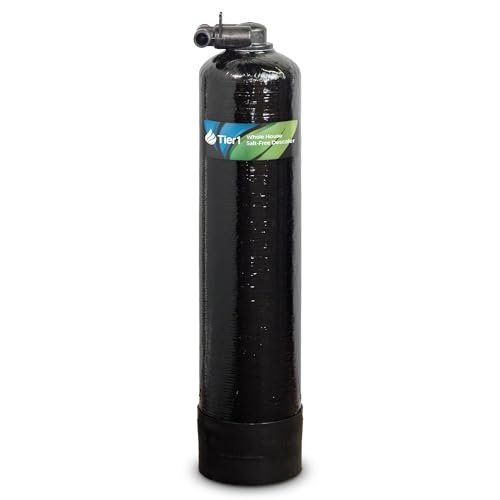
The Tier1 Salt-Free Descaler Water Conditioning System is designed to reduce scale formation without using conventional ion-exchange softening. Instead of removing hardness minerals, it uses template-assisted crystallization, commonly called TAC, to change how those minerals behave as water moves through the plumbing system.
This distinction is important. The system is marketed as a water-softener alternative for homeowners mainly concerned about scale, but it does not produce genuinely softened water, reduce total dissolved solids, or remove calcium and magnesium. Its appeal lies in simpler operation: no salt, no electrical control valve, no regeneration cycle, and no wastewater from backwashing.
What Is the Tier1 Salt-Free Descaler?
The Tier1 system is a whole-house water conditioner installed on the main water line. Its purpose is to treat incoming water before it reaches fixtures and water-using appliances.
The system uses TAC media rather than salt-based ion-exchange resin. As hard water passes through the conditioning tank, the media encourages dissolved hardness minerals to form microscopic crystals that are less likely to attach firmly to plumbing surfaces.
The minerals remain in the water. The treatment is intended to reduce their tendency to create hard, adhesive scale.
This makes the system fundamentally different from a traditional water softener.
How Hard Water Creates Scale
Hard water contains dissolved minerals, primarily calcium and magnesium. These minerals are not necessarily a problem while they remain dissolved, but they can form deposits when water is heated, evaporates, or experiences changes in pressure and chemistry.
Scale commonly appears in:
- Water heaters
- Faucet aerators
- Showerheads
- Coffee makers
- Dishwashers
- Washing machines
- Supply pipes
- Valves
- Heating elements
- Plumbing fixtures
Inside a water heater, scale can accumulate on heating surfaces or at the bottom of the tank. This layer may interfere with heat transfer, contribute to noise, and increase the amount of energy required to heat water.
Inside pipes and fixtures, heavy deposits may gradually reduce internal diameter and restrict flow.
How TAC Water Conditioning Works
Template-assisted crystallization does not remove minerals from the water. Instead, it promotes the formation of tiny mineral crystals that remain suspended and pass through the plumbing system.
The TAC media contains specially engineered surfaces that act as templates. Dissolved calcium and magnesium collect around these sites and form microscopic crystals.
Once the crystals reach a certain size, they detach from the media and continue through the water supply. Because the minerals have already crystallized in suspension, they may be less likely to form hard scale on pipes, heating elements, and fixtures.
This process is often described as scale prevention or scale control rather than water softening.
Salt-Free Conditioning vs. Traditional Water Softening
Choosing between a TAC conditioner and an ion-exchange softener depends on the water problem you want to solve.
What a Salt-Based Water Softener Does
A conventional softener exchanges calcium and magnesium ions for sodium or potassium ions.
This process actually reduces measured water hardness and can provide familiar soft-water benefits, such as:
- Improved soap lather
- Less soap scum
- Reduced spotting
- A different feel when bathing
- Lower calcium and magnesium concentrations
The resin must periodically regenerate using salt and water.
What the Tier1 Descaler Does
The Tier1 conditioner leaves calcium and magnesium in the water but changes their scaling behavior.
It is intended to:
- Reduce new scale formation
- Protect plumbing and appliances
- Avoid salt handling
- Eliminate regeneration cycles
- Avoid backwash wastewater
- Operate without a complex control valve
It will not provide all the effects associated with truly softened water.
What the System Does Not Do
The Tier1 descaler should not be presented as a direct replacement for a softener in every home.
It does not:
- Remove calcium
- Remove magnesium
- Reduce total hardness
- Lower total dissolved solids
- Remove chlorine unless paired with separate filtration
- Remove iron
- Remove sediment
- Improve every taste or odor issue
- Prevent all water spotting
- Create the slippery feel associated with softened water
Soap behavior and visible mineral residue may remain different from what users experience with an ion-exchange system.
Whole-House Scale Protection
Installed at the point where water enters the home, the system can treat water supplied to multiple fixtures and appliances.
Potentially protected equipment includes:
- Water heaters
- Faucets
- Shower valves
- Showerheads
- Washing machines
- Dishwashers
- Toilets
- Supply lines
- Coffee equipment
- Humidifiers
The system is intended to reduce the amount of new scale that adheres to these surfaces.
Actual performance depends on water chemistry, flow rate, hardness, temperature, installation, and whether the incoming water remains within the manufacturer’s specified operating limits.
Potential Effect on Existing Scale
The product description states that TAC-conditioned water may gradually help loosen or dissolve some existing scale as it moves through the plumbing.
This should be viewed as a gradual conditioning effect rather than an immediate pipe-cleaning process. The degree of scale reduction will vary according to deposit thickness, mineral composition, water chemistry, and plumbing condition.
As older deposits loosen, small particles may travel downstream and collect in:
- Faucet aerators
- Showerhead screens
- Appliance inlet filters
- Small valves
- Fine plumbing passages
Temporary clogging may therefore occur during the early operating period. Aerators and screens should be inspected and cleaned as needed.
A severely scaled plumbing system may require professional cleaning or component replacement rather than relying solely on a conditioner.
Upflow Design with No Backwashing
The Tier1 unit uses an upflow configuration. Water enters the bottom of the media tank, travels upward through the conditioning media, and exits through the top connection.
This arrangement is designed to operate without a backwashing control valve.
The simplified design offers several advantages:
- No regeneration cycle
- No drain connection for backwash
- No brine tank
- No electronic programming
- No motorized valve
- Fewer mechanical components
- Lower routine maintenance
Because there are fewer moving parts, there are also fewer components that can fail compared with many automatic softening systems.
No Salt Required
One of the main reasons homeowners consider salt-free conditioning is to avoid buying, carrying, and loading bags of water-softener salt.
A TAC system does not require:
- Sodium chloride pellets
- Potassium chloride
- A brine tank
- Salt bridging maintenance
- Brine cleaning
- Regeneration scheduling
This can be particularly convenient for homeowners who have limited storage, mobility concerns, or a preference for lower-maintenance equipment.
It also avoids adding sodium or potassium through the softening process because the hardness minerals are not exchanged.
No Regeneration Wastewater
Traditional softeners periodically flush concentrated brine and rinse water into a drain.
The Tier1 conditioner does not regenerate, so it does not create that recurring wastewater stream. This may be valuable in locations with:
- Septic systems
- Water-use restrictions
- Limited drainage access
- High water costs
- Local restrictions on softener discharge
Local plumbing requirements should still be checked before installation, particularly for whole-house treatment equipment.
Flow Rate and Household Capacity
The system is described as supporting flow rates of up to approximately 12 gallons per minute.
A 12 GPM rating may be sufficient for many residential applications, but actual household demand should be calculated before purchase.
Simultaneous water use can include:
- Multiple showers
- Toilets refilling
- A washing machine
- A dishwasher
- Kitchen faucets
- Outdoor irrigation
If the home’s peak demand exceeds the system’s practical service flow, occupants may experience lower pressure or reduced conditioning effectiveness.
Pipe size, pressure, fixture count, and household occupancy all influence system sizing.
Claimed Media Capacity and Service Life
The manufacturer describes the media as capable of treating up to approximately 900,000 gallons or lasting around eight to nine years under specified conditions.
Those figures should be treated as conditional estimates rather than guaranteed service life.
Longevity depends on:
- Daily water consumption
- Chlorine concentration
- Iron concentration
- Copper concentration
- pH
- Hardness
- Water temperature
- Sediment levels
- Flow rate
- Installation quality
A household using large volumes of water may reach the rated gallon capacity earlier than one with modest consumption.
Important Incoming Water Requirements
The product description identifies several water-quality limits for expected performance:
- Chlorine below approximately 0.5 parts per million
- Iron below approximately 0.3 parts per million
- Copper below approximately 1.3 parts per million
- pH between approximately 6.5 and 8.5
These parameters matter because chlorine, metals, sediment, and unsuitable pH may affect the conditioning media.
Municipal water often contains more than 0.5 ppm of chlorine. In such cases, separate activated-carbon pretreatment may be needed before the TAC unit.
Well water may require testing and treatment for iron, manganese, sediment, sulfur, or microbial concerns.
Why Water Testing Matters
A laboratory or professional water analysis should be completed before selecting a whole-house conditioning system.
At minimum, testing should consider:
- Total hardness
- Iron
- Manganese
- Copper
- Chlorine or chloramine
- pH
- Total dissolved solids
- Sediment
- Turbidity
- Sulfur compounds
- Nitrates where relevant
- Microbial contamination for private wells
Without testing, it is difficult to know whether TAC conditioning is appropriate or whether pretreatment is required.
A system installed outside its specified water parameters may deliver disappointing results or experience shortened media life.
Chlorine Pretreatment
If the incoming chlorine concentration exceeds the recommended level, a whole-house carbon filter may be installed upstream.
Carbon filtration can reduce chlorine before water enters the TAC media. This may also improve taste and odor at household fixtures.
However, carbon filters introduce their own considerations:
- Cartridge replacement
- Media capacity
- Pressure loss
- Bacterial management
- Correct sizing
- Backwashing requirements for larger tanks
Chloramine requires different treatment considerations from free chlorine and should be evaluated separately.
Iron and Sediment Pretreatment
Iron can foul or interfere with conditioning media. Sediment may also accumulate in the tank or restrict flow.
Homes with well water may need upstream equipment such as:
- Sediment filters
- Spin-down filters
- Iron-removal systems
- Oxidation filters
- Cartridge housings
- Backwashing media filters
The correct pretreatment depends on the type and concentration of contamination.
Dissolved ferrous iron behaves differently from visible ferric iron particles, so testing should identify the specific form present.
Installation Location
The system is normally installed on the main cold-water supply after any required pretreatment.
A typical treatment order might be:
- Main shutoff valve
- Sediment filtration
- Iron or manganese treatment
- Chlorine reduction
- Tier1 TAC conditioner
- Water heater and household distribution
The exact arrangement should follow manufacturer instructions and professional recommendations.
Outdoor irrigation lines may be bypassed if treating landscape water is unnecessary, though the plumbing layout will determine whether that is practical.
Bypass Valve Considerations
A bypass arrangement is highly recommended even when the system itself has no moving control valve.
A bypass allows water to continue serving the home during:
- Maintenance
- Media replacement
- Plumbing repairs
- System testing
- Troubleshooting
It also makes it easier to compare conditioned and untreated water when evaluating performance.
The source description does not clarify whether a bypass assembly is included, so package contents should be verified.
Professional vs. DIY Installation
Experienced homeowners may be able to install the system, but whole-house plumbing work requires careful planning.
Installation may involve:
- Cutting the main water line
- Supporting a heavy media tank
- Installing unions
- Adding a bypass
- Selecting correct fittings
- Managing grounding requirements
- Checking flow direction
- Pressure testing
- Following local plumbing code
A licensed plumber can help prevent leaks, excessive pressure drop, unsupported piping, or incorrect treatment order.
The tank should remain upright and be installed in a location protected from freezing, flooding, excessive heat, and physical impact.
Pressure and Flow Considerations
Every water-treatment device creates some resistance to flow.
Before installation, verify:
- Incoming static pressure
- Pressure during peak use
- Main pipe diameter
- Expected household flow
- Maximum system pressure
- Available installation space
A system that is too small may reduce shower pressure when several fixtures operate simultaneously.
Homes with unusually high pressure may need a pressure-reducing valve to protect plumbing and treatment equipment.
What Changes Should Homeowners Expect?
A salt-free descaler does not usually produce the dramatic tactile change associated with conventional soft water.
Users may instead notice gradual effects such as:
- Less stubborn scale on heating surfaces
- Easier cleaning of fixtures
- Reduced mineral buildup in appliances
- Slower scale formation in plumbing
- Existing deposits loosening over time
Water may still leave spots after evaporation because dissolved minerals remain present.
Results should be judged based on scale behavior and equipment condition rather than hardness-test readings alone.
Why Hardness Test Results Will Not Change
A standard hardness test measures the concentration of calcium and magnesium in water.
Because TAC does not remove these minerals, water tested after the conditioner will generally show similar hardness to untreated water.
This does not necessarily mean the system is doing nothing. It reflects the difference between mineral removal and mineral conditioning.
Performance evaluation may require observing scale accumulation over time rather than relying solely on a hardness test strip.
Maintenance Requirements
The system is designed to require minimal routine maintenance.
There is no salt to add, brine tank to clean, or regeneration cycle to program. However, low maintenance does not mean no inspection.
Homeowners should periodically:
- Check for plumbing leaks
- Monitor household water pressure
- Inspect upstream filters
- Confirm water chemistry remains within specifications
- Clean faucet aerators during early descaling
- Track media age and estimated water usage
- Check for changes in scale formation
Pretreatment equipment may require more frequent maintenance than the TAC unit itself.
Media Replacement
When the media reaches the end of its useful life, it can reportedly be replaced without discarding the complete tank and plumbing assembly.
This may reduce long-term ownership cost compared with replacing the entire system.
Media replacement should follow the manufacturer’s instructions. The procedure may require:
- Shutting off the water
- Bypassing the unit
- Depressurizing the tank
- Disconnecting plumbing
- Removing old media
- Sanitizing components
- Refilling with approved replacement media
- Restarting and flushing the system
Professional service may be preferable because media tanks are heavy and pressurized plumbing must be resealed correctly.
Salt-Free Descaler vs. Magnetic or Electronic Descaler
TAC conditioning should not be confused with devices that wrap wires or magnets around a pipe.
The Tier1 system uses physical media inside a tank, and all household water passes directly through that media.
Magnetic and electronic descalers claim to influence minerals without direct contact media, but their performance and application differ widely.
Buyers comparing products should distinguish among:
- TAC media conditioners
- Ion-exchange softeners
- Polyphosphate dosing systems
- Reverse osmosis
- Magnetic descalers
- Electronic descalers
Each technology addresses water differently.
Salt-Free Descaler vs. Reverse Osmosis
Reverse osmosis removes many dissolved substances from water by forcing it through a semipermeable membrane.
A whole-house TAC system does not perform that function.
Reverse osmosis is commonly used at a drinking-water faucet for reducing:
- Total dissolved solids
- Sodium
- Certain metals
- Nitrates
- Fluoride
- Other dissolved contaminants
TAC conditioning is intended for scale control throughout the house.
Some homes use both technologies: a whole-house conditioner for plumbing protection and an under-sink reverse-osmosis system for drinking water.
Who May Benefit Most from This System?
The Tier1 conditioner may be a good match for homeowners who:
- Have moderate hard water
- Mainly want to reduce scale
- Do not require truly softened water
- Want to avoid salt
- Prefer no regeneration wastewater
- Have water chemistry within the specified limits
- Want low routine maintenance
- Have adequate space for a whole-house tank
- Are willing to add pretreatment when necessary
It may also suit properties where traditional softener discharge is undesirable or restricted.
Who May Prefer a Traditional Softener?
A conventional ion-exchange softener may be more appropriate for households that want:
- Lower measured hardness
- Better soap lather
- Less soap scum
- Reduced spotting
- The familiar feel of soft water
- Treatment of very hard water
- More predictable hardness removal
A water professional can help compare operating costs, maintenance, discharge requirements, and expected results.
Common Mistakes to Avoid
Calling the System a Water Softener
The unit conditions hardness minerals but does not remove them.
Installing Without Water Testing
Iron, chlorine, copper, sediment, or unsuitable pH may reduce performance.
Ignoring Pretreatment Requirements
Municipal chlorine or well-water contaminants may need to be treated first.
Choosing a System Based Only on Household Size
Peak flow rate and simultaneous fixture use are just as important.
Expecting Hardness Tests to Drop
Calcium and magnesium remain in the water, so hardness readings should remain similar.
Expecting Spot-Free Surfaces
Minerals can still remain after water evaporates.
Assuming Existing Scale Will Disappear Immediately
Any reduction of old deposits is gradual and may be incomplete.
Neglecting Aerator Cleaning
Loosened scale may temporarily clog screens and small passages.
Installing Without a Bypass
Future servicing becomes much more difficult without one.
Advantages and Considerations
Advantages
- Salt-free scale conditioning
- Uses TAC scale-prevention media
- No brine tank
- No salt bags
- No regeneration cycles
- No routine backwash wastewater
- No electronic control valve
- Few moving parts
- Low routine maintenance
- Up to approximately 12 GPM stated flow
- Replaceable media
- Whole-house application
- May gradually reduce some existing scale
- Can help protect plumbing and appliances
- Does not add sodium through ion exchange
Potential Considerations
The system does not soften water or remove hardness minerals. It will not lower TDS, eliminate all spotting, or create the same soap performance as a salt-based softener.
The stated media life depends on strict water-quality conditions. Chlorine, iron, copper, sediment, or unsuitable pH may require pretreatment.
Claims about capacity, service life, scale prevention, and removal of existing deposits should be evaluated according to the actual household water chemistry and usage.
Frequently Asked Questions
Does the Tier1 system soften water?
No. It conditions hardness minerals to reduce their tendency to form scale, but it does not remove calcium or magnesium.
Will it reduce water hardness readings?
No. Standard hardness tests will generally show similar results before and after treatment.
Does it lower TDS?
No. Dissolved minerals remain in the water.
Does it require salt?
No. The TAC system does not use salt or potassium chloride.
Does it need electricity?
The described upflow system has no electronic control valve and generally does not require electricity.
Does it backwash?
No routine backwashing or regeneration is described.
Does it waste water?
It does not create regeneration wastewater like a conventional softener.
Can it remove existing scale?
The manufacturer states that conditioned water may gradually loosen or dissolve some existing scale. Results will vary, and severe deposits may require separate cleaning.
Why are my faucet aerators clogging after installation?
Small pieces of loosened scale may collect in aerators and screens during the early treatment period.
What is the maximum stated flow rate?
The product description lists a flow rate of up to approximately 12 gallons per minute.
How long does the media last?
The stated estimate is approximately 900,000 gallons or eight to nine years under specified water conditions and usage.
Does chlorine affect the system?
The description recommends incoming chlorine below approximately 0.5 ppm. Higher concentrations may require upstream carbon filtration.
Can it treat well water?
Potentially, but well water must be tested. Iron, manganese, sediment, sulfur, pH, and microbial concerns may require pretreatment.
Does it remove iron?
No. Iron should be treated separately if it exceeds the system’s recommended limit.
Will it prevent water spots?
It may make some scale deposits less adhesive, but minerals remain in the water and spots can still form after evaporation.
Is professional installation recommended?
Whole-house installation often benefits from a licensed plumber, particularly when adding pretreatment, a bypass, or new fittings.
Final Thoughts
The Tier1 Salt-Free Descaler Water Conditioning System is designed for homeowners who want to reduce scale without maintaining a conventional salt-based softener. Its TAC media conditions calcium and magnesium rather than removing them, helping limit their tendency to attach to pipes, fixtures, and heating surfaces.
The system’s main advantages are operational simplicity and low maintenance. It does not require salt, electricity, regeneration, backwashing, or a brine drain. Its replaceable media and lack of moving control components may also support lower long-term maintenance costs.
Those benefits come with an important tradeoff: this is not a true water softener. Hardness readings remain unchanged, minerals stay in the water, and some spotting or soap-related effects may continue.
The best results depend on proper sizing and verified water chemistry. Chlorine, iron, copper, sediment, and pH must remain within the system’s operating limits, and pretreatment may be necessary.
For homes with moderate hardness where scale prevention is the main objective, the Tier1 conditioner can be a practical salt-free alternative. Households seeking fully softened water and the broader lifestyle effects of hardness removal may be better served by a conventional ion-exchange system.