EcoSmart ECO 11 Tankless Water Heater Review: Compact On-Demand Hot Water for Small Homes and Point-of-Use Applications
A tankless water heater can be an efficient alternative to a traditional storage tank when space is limited or hot-water demand is relatively modest. Instead of heating and holding dozens of gallons around the clock, a tankless unit activates only when water begins flowing, then heats it as it passes through the system.
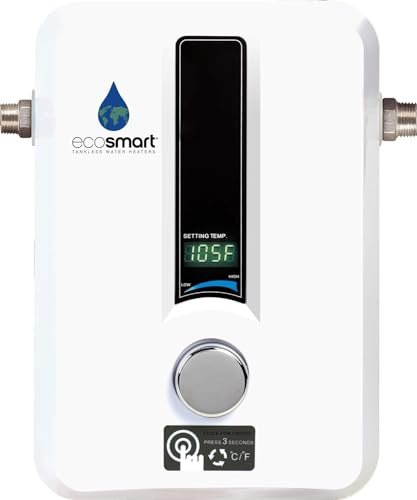
The EcoSmart ECO 11 is a compact electric tankless water heater designed for small households, bathrooms, offices, sinks, and other low-flow applications. Its actual performance depends heavily on the temperature of the incoming water, the desired outlet temperature, and the combined flow rate of the fixtures being used.
In warmer climates, the ECO 11 may support more than one low-flow fixture at a time. In colder regions, it is generally better suited to a single shower or point-of-use installation. Proper sizing and electrical planning are therefore essential before purchase.
What Is the EcoSmart ECO 11?
The ECO 11 is a 13-kilowatt electric tankless water heater that mounts on a wall and produces hot water on demand. It does not include a storage tank, so it takes up considerably less space than a conventional water heater.
The unit is designed to provide between approximately 1.3 and 3.1 gallons per minute, depending on inlet temperature and the amount of temperature rise required. Warmer incoming water allows the heater to support a higher flow rate, while colder water reduces its output capacity.
Its adjustable temperature range is approximately 80°F to 140°F, or about 27°C to 60°C.
How Tankless Water Heating Works
When a hot-water fixture opens, sensors detect water flow and activate the heating elements. The unit then adjusts power and flow to bring the water as close as possible to the selected temperature.
Because there is no storage tank, the heater does not run continuously to maintain a reserve of hot water. It operates only when demand is present.
This design can provide several benefits:
- No standby heat loss from a storage tank
- Compact wall-mounted installation
- Continuous hot water within the unit's capacity
- Precise digital temperature adjustment
- Reduced space requirements
However, “endless” hot water does not mean unlimited flow. The unit can continue heating water for as long as necessary, but only at the flow rate supported by the incoming water temperature and selected outlet temperature.
Performance Depends on Climate and Inlet Temperature
The most important factor when sizing the ECO 11 is the temperature of the water entering the home.
In warm climates, incoming water may already be close to 67°F or higher. The heater therefore needs to raise the temperature by a relatively small amount, allowing it to support more flow.
In colder climates, incoming water may be far cooler. Raising that water to a comfortable shower temperature requires more energy, reducing the number of gallons per minute the unit can deliver.
The manufacturer indicates that the ECO 11 may support:
- One shower in colder climates
- Up to two low-flow showers in warmer climates
- A shower and a low-flow sink under favorable conditions
- A single sink or other point-of-use fixture in colder regions
These are general scenarios, not guarantees. Fixture flow rates, seasonal groundwater temperature, plumbing configuration, and desired temperature all influence actual performance.
Suitable Applications
The ECO 11 is best understood as a compact, lower-capacity tankless heater rather than a universal whole-house solution.
Small Bathroom
It may provide hot water for one low-flow shower, particularly in moderate or warm climates.
Kitchen or Utility Sink
The unit can work well as a point-of-use heater for a sink located far from the main water heater.
Office Breakroom
For handwashing and light sink use, its compact dimensions can make it a convenient option.
Studio or Small Apartment
In a warm region with controlled fixture flow, it may support a small living space with limited simultaneous demand.
Remote Fixture
Installing the heater near a distant bathroom, workshop, garage, or utility sink can reduce the wait for hot water and minimize heat loss through long pipe runs.
Digital Temperature Control
The built-in digital controls allow users to set the desired outlet temperature in one-degree increments.
This level of adjustment is useful for balancing comfort, safety, and energy consumption. A lower temperature may be sufficient for handwashing, while showering or cleaning may require a higher setting.
The system continuously monitors temperature and adjusts operation to maintain output close to the selected setting, provided demand remains within its capacity.
Compact Wall-Mounted Design
The ECO 11 measures approximately:
- 11.5 inches wide
- 8 inches high
- 3.75 inches deep
Its compact body is substantially smaller than a traditional tank-style heater and can be installed on a suitable wall near the point of use.
Potential installation locations include:
- Utility closets
- Under-sink areas with sufficient clearance
- Mechanical rooms
- Garages
- Small bathroom service spaces
Local electrical and plumbing codes determine where and how the heater may be mounted.
Energy Efficiency
The unit is described as having a thermal efficiency of approximately 99%, meaning most of the electrical energy it consumes is transferred into the water.
Because it heats water only when there is demand, it avoids the standby heat loss associated with keeping a storage tank hot throughout the day.
Actual energy savings depend on:
- Household water usage
- Local electricity rates
- Previous water-heating equipment
- Hot-water temperature settings
- Installation location
- Plumbing heat loss
A tankless heater may reduce wasted energy, but operating costs still depend on the amount of hot water consumed and the price of electricity.
Electrical Requirements
The ECO 11 is a high-power electrical appliance and requires a properly sized dedicated circuit.
The supplied specifications indicate an amperage draw of approximately 54 amps. This generally requires appropriate wiring, overcurrent protection, grounding, and panel capacity.
Before purchasing, confirm:
- Available electrical service
- Breaker requirements
- Wire gauge
- Voltage compatibility
- Local code requirements
- Space in the electrical panel
Installation should be performed by qualified professionals unless local regulations explicitly permit otherwise and the installer has the necessary experience.
An undersized circuit or improper wiring can create serious safety hazards.
Water Flow and Temperature Rise
The heater's published flow range of approximately 1.3 to 3.1 gallons per minute reflects different temperature-rise conditions.
For example, water entering at a warm temperature requires less heating than very cold groundwater. That allows a higher flow rate while maintaining the selected outlet temperature.
When comparing this heater with your fixtures, check the rated flow of:
- Showerheads
- Bathroom faucets
- Kitchen faucets
- Appliance connections
A 1.5 GPM showerhead places less demand on the heater than a 2.5 GPM model. Low-flow fixtures can therefore improve comfort and reduce temperature fluctuations.
Installation Considerations
Correct installation affects both safety and performance.
Confirm the Unit Is Properly Sized
Do not select the heater based only on the number of fixtures. Calculate the required temperature rise and total simultaneous flow.
Verify Electrical Capacity
A qualified electrician should confirm that the service panel and branch circuit can support the heater.
Use Appropriate Plumbing Connections
Connections must comply with the manufacturer's requirements and local plumbing codes.
Install Service Valves Where Appropriate
Isolation and flushing valves can simplify future maintenance and descaling.
Consider Water Hardness
Mineral buildup can reduce heat-transfer efficiency. Homes with hard water may require more frequent maintenance or upstream water treatment.
Maintenance Requirements
Tankless water heaters still require routine care.
Mineral scale may accumulate inside the heat exchanger, especially in areas with hard water. Periodic flushing with an approved descaling solution helps preserve performance and flow.
Maintenance may include:
- Inspecting electrical connections
- Checking for plumbing leaks
- Cleaning inlet screens
- Flushing mineral deposits
- Verifying temperature operation
- Inspecting valves and fittings
The maintenance interval depends on local water hardness and usage.
Advantages and Considerations
Advantages
- Compact wall-mounted design
- Produces hot water only when needed
- No storage tank or standby tank loss
- Digital temperature adjustment in one-degree increments
- Suitable for point-of-use and low-flow applications
- Can provide continuous hot water within its flow capacity
- High stated thermal efficiency
- Useful for warm climates and small spaces
Potential Considerations
The ECO 11 may not support several high-flow fixtures simultaneously, especially in colder climates. Its electrical demand is substantial despite its compact size, and professional installation may be necessary.
Performance also depends heavily on incoming water temperature, so buyers should use the manufacturer's sizing guide rather than relying on general fixture-count claims.
Frequently Asked Questions
Can the EcoSmart ECO 11 supply an entire house?
It may support a very small home in a warm climate with low-flow fixtures and limited simultaneous demand. In many situations, it is better suited to a bathroom, sink, office, or other point-of-use application.
Can it run two showers?
Under favorable warm-water conditions, the manufacturer suggests it may support two low-flow showers. In colder climates, one shower is a more realistic expectation.
What is the temperature range?
The adjustable range is approximately 80°F to 140°F, equivalent to about 27°C to 60°C.
Does it provide endless hot water?
It can provide continuous hot water as long as the flow rate remains within its heating capacity. If demand is too high, the outlet temperature may fall.
Does it require a dedicated electrical circuit?
Yes. The unit draws approximately 54 amps and requires electrical installation that meets the manufacturer's specifications and local codes.
Is it more efficient than a tank water heater?
Its on-demand operation eliminates standby tank heating, and the manufacturer states approximately 99% thermal efficiency. Actual savings vary based on usage and energy prices.
Can it be installed under a sink?
Its compact size may allow under-sink installation where sufficient space, ventilation, electrical access, and code compliance are available.
Does hard water affect it?
Yes. Mineral scale can accumulate inside tankless heaters and reduce efficiency. Periodic descaling may be required.
Final Thoughts
The EcoSmart ECO 11 is a compact electric tankless water heater best suited to carefully sized, low-flow applications. Its digital temperature control, wall-mounted design, and on-demand operation make it attractive for bathrooms, sinks, offices, small apartments, and remote fixtures.
Its greatest strength is efficient use of space and energy. Its main limitation is capacity: actual flow depends on climate and incoming water temperature. Buyers in warmer regions may be able to operate more than one low-flow fixture, while those in colder areas should generally plan for a single shower or point-of-use installation.
Before purchasing, calculate the required temperature rise, confirm fixture flow rates, and verify that the electrical service can support the approximately 54-amp load. When correctly sized and professionally installed, the ECO 11 can provide reliable, consistent hot water without the bulk of a conventional storage tank.